
As part of the broader Network as Code landscape, VXLAN as Code accelerates network orchestration by simplifying access through abstraction and curated examples.
It enables fabric deployment in minutes using an easy-to-use data model, abstracting away references, dependencies, and loops. Users focus on defining intended configurations while leveraging pre-built, tested Ansible modules—no low-level device expertise required.
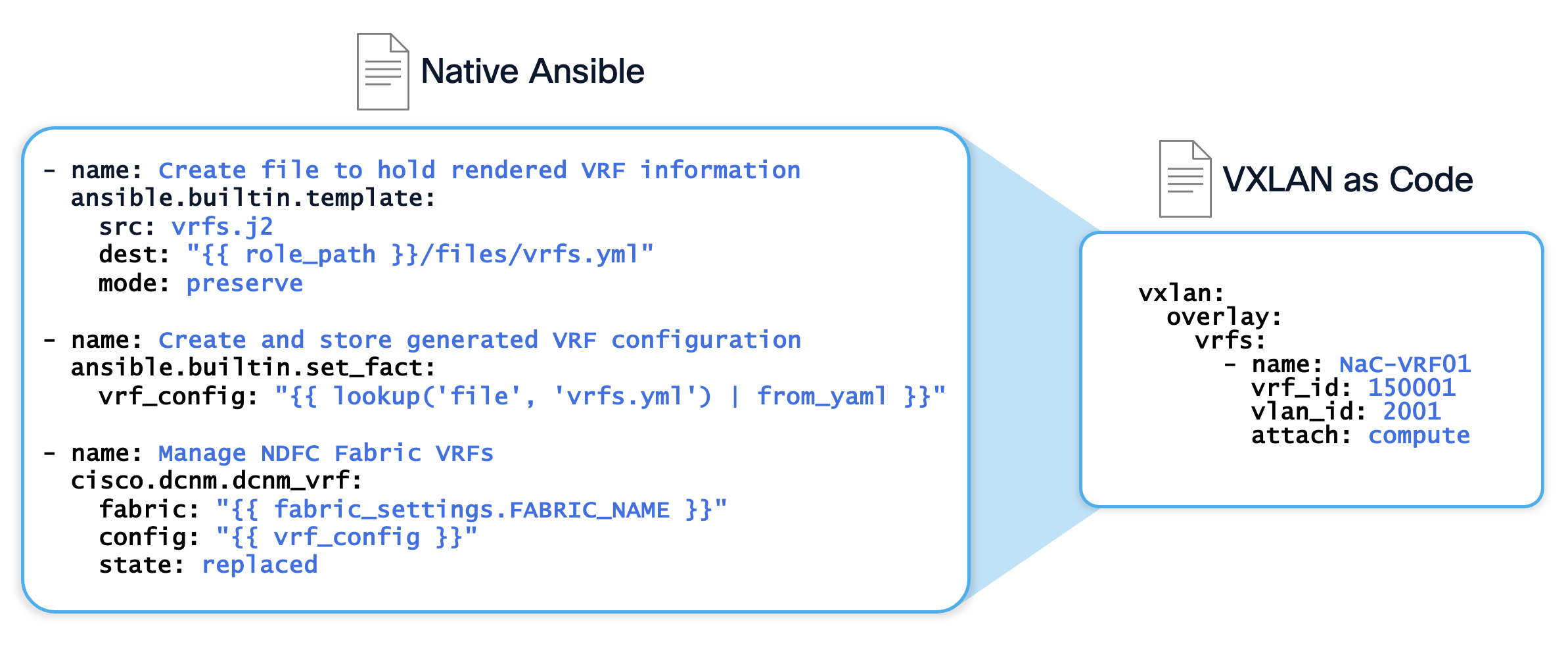
The data model, created by network engineers for each Cisco feature, embeds best practices and simplifies complexity through a structured format that enables validation and testing.
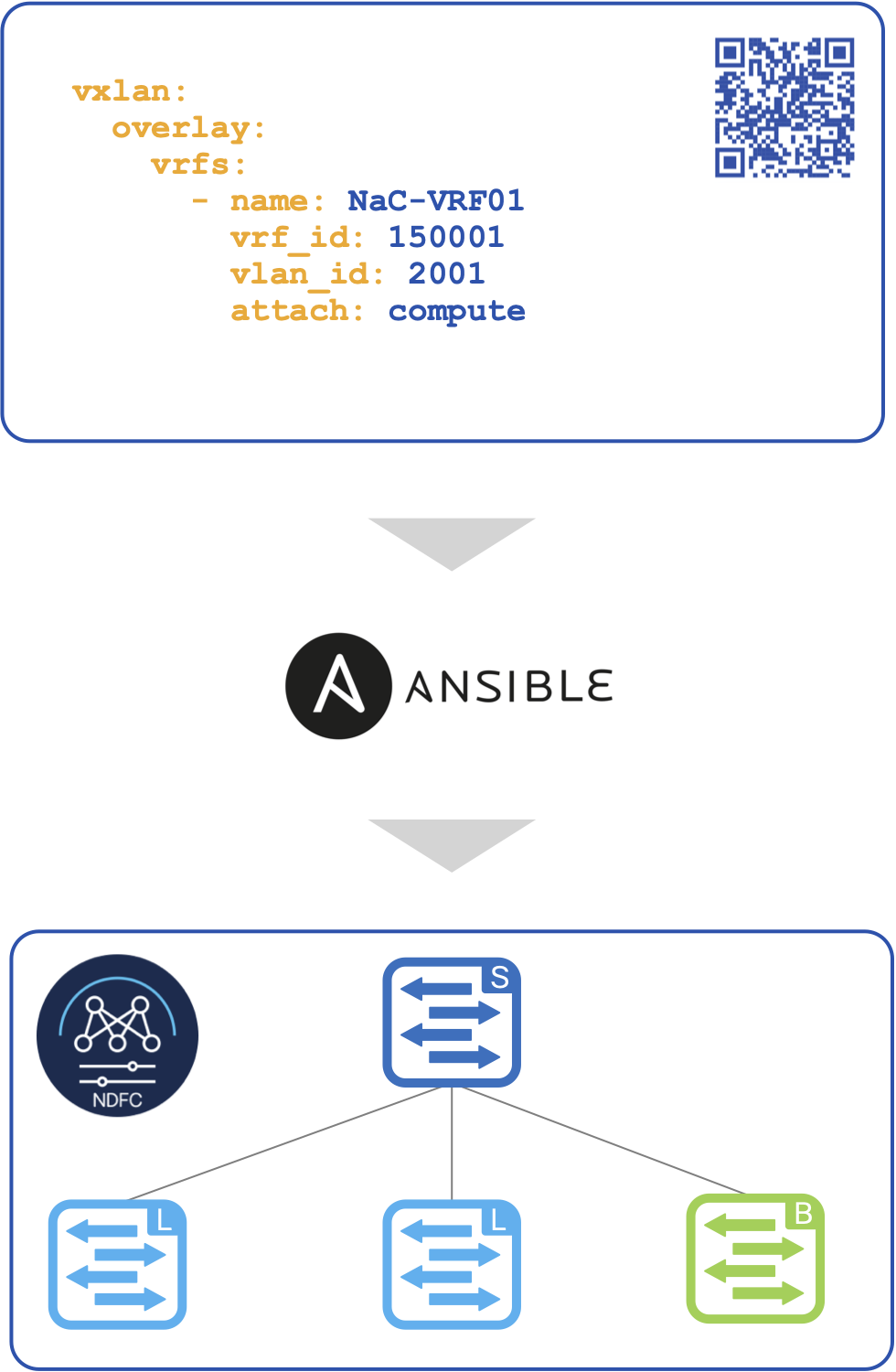
The data model provides the structure of all the variables and parameters that are required to build your fabric. It is defined using several YAML files, which are easy to read and write, and are divided into multiple high-level sections or keys. For your reference, the entire data model for VXLAN as Code can be found here:
VXLAN as Code Data Model
Navigate to the next section to begin working with VXLAN as Code.